Plot Notes

A personal journal, open for the world to read, recording the progress of a novice allotmenteer on his allotment.


Weed it and reap.


Monday, 23 September 2013

Better

Last year my grape harvest was sunk without trace. Lots of grapes formed but when they needed sunshine all they got was rain and the brief, late, dry spell at the end of the summer was too little too late. They ripened but were on the small side. I set an afternoon aside to go and harvest them but when I arrived with my scissors and large plastic tub I found that the birds had beaten me to it and the vines were bare. 2012 was not a vintage year, unless you were a bird.

Apart from losing one of my vines in the standing water which did not drain away over the winter, this year has been very much better. We avoided the late frost which has set me back in previous years and we have had a decent amount of the right sort of weather at the right times, albeit everything has been running a couple of weeks late. Saturday was a very warm and sunny September day and so I decided to let the grapes bask in the sun for one more day before picking them on Sunday.
On Sunday afternoon I set about picking the grapes. There were plenty of large, fat, juicy bunches. As I Snipped away and pondered The Meaning of Life the immortal words of Monty Python's Mr Creosote came to mind, "Better get a (bigger) bucket".
I spent Sunday evening pressing grapes by hand. I need to add a fruit-press to my wish-list before next autumn. After about three hours I had hand-squeezed four and a half gallons of juice from the grapes. I have been left with two purple-stained hands. I have scrubbed and scrubbed them but, 24 hours later, they remain claret-tinged.

I sprinkled some crushed campden tablets into the grape juice and then left the must overnight. Tonight I have measured the specific gravity and added 2kg of sugar. I then added a sachet of wine yeast to the mix along with some yeast nutrient and now I'm waiting for the sugar to turn to alcohol. Next weekend, or maybe next week I will transfer the must into air-locked demi-johns. There are still plenty of bunches of grapes still on the vines. If I get chance I will pick them and set off a second batch of wine.
By the way, please let me know if you want to use any of my photos. I have noticed that my earlier "bud-burst" photo has turned up on a number of`commercial websites around the world, copied without my permission and not credited to me.

Sunday, 15 September 2013

Still here

I can't believe that it is so long since I updated this blog. I am still here and still allotmenting. The weather made last year a very difficult year on the plot. I never really caught up after the set-backs caused by frost and floods in the late Spring and early Summer. This year has been much better in terms of both weather and produce. Here's a sample of the harvest from yesterday.

Wednesday, 30 May 2012

Enormous beetroot spotted on allotment

Today has been a glorious sunny day with temperatures well above 25 degrees centigrade. I have spent the afternoon lugging barrow loads of topsoil, manure and compost to go into some raised beds which I have made as part of my plan to avoid a repeat of the flooding which I suffered earlier this year. The theory is that the growing area will be raised a few inches above the likely water level and the paths between the beds will channel excess rain water away. It has been hot and strenuous work under the scorching sun. I even took my shirt off. I now look like an enormous bright red beetroot.

Tuesday, 22 May 2012

Metamorphosis

You may have seen here and also here that for the last two or three weeks I have had my vines wrapped in fleece in an attempt to protect them from the risk of damage from the cruel frost which has visited the plot a few times in early May.

To the casual observer the vines may have appeared lifeless as they have hung there draped in white fleece death shrouds and I must admit that in the dark, when I have gone to light the greenhouse heater, they have looked like nine frozen contorted ghosts. However, I think they have had an appearance which is more like huge white pupae hanging from the vine wires. Inside each chrysalis metamorphosis has been taking place as buds have burst, leaves have formed and new growth has started to reach up towards the sun.

Last weekend I felt it safe to declare that there will be no more frost this season and so on Sunday afternoon I carefully opened and removed the fleece chrysalis from each vine and, to continue the metaphor, the new green leaves unfurled and started to soak up the bright and warming sunshine like newly emerged butterflies. And so, the vines have entered the next stage of their life cycle.


Make a Wish

Make a wish and blow...

...I wish there weren't so many dandelions on my allotment plot. Doh!

Sunday, 13 May 2012

Precautions Pay Off

This time last year my early vine growth was stopped in its tracks by a cruel May frost. This year I have taken precautions and wrapped the vines in fleece. I had a peep behind the fleece this morning and I'm pleased to report that the vines are thriving. I'll leave the fleece in place until next weekend when, hopefully, all risk of frost will have passed and I will then look forward to a long hot Summer and a bumper harvest of grapes ready for pressing and fermenting.


Sunday, 6 May 2012

Home Grown Allotment Pest

I seem to be personally responsible for breeding the most destructive allotment pest that I have yet encountered. When I was out working yesterday my daughter went to the allotment with her friend. Before coming home she forgot to close the greenhouse door (What she was doing in the greenhouse in the first place  is yet to be satisfactorily explained). I was not aware that she had been in the greenhouse until I popped round there on my way out this morning. I found the greenhouse door wide open and I was devastated to see my seedlings hanging limp and tinged with grey and all suffering obvious damage from the overnight frost.

The leeks and peas will probably survive but the courgettes have certainly had it. At least half of the tomatoes are gone, the runners are goners, the corn is hanging limp and the beetroot, sprouts and broccoli all look very poorly. I have got a few back-up seedlings on the window sills at home but I will still now need to start sowing again. It feels like I'm back to square one. I feel very deflated.

I was so angry at her carelessness that I've told my daughter that our bank-holiday kayaking trip planned for tomorrow is cancelled and the time will be spent on the allotment making up for wasted time. The trouble is that I was looking forward to our day out with the kayaks more than anything and so I may relent and still have the day out. Whether I take my daughter with me or just leave her in the greenhouse, with the door wide open, is yet to be decided.

Friday, 4 May 2012

Avant Garden

If the artist Christo had an allotment I think it might look something like this...
...but he's probably not so cutting edge as to attempt to do anything so radical (or daft) as to cultivate grapevines in a North Lincolnshire swamp where, even in May, the so-called Queen of Months, there is a serious threat of damage from vicious sub-zero temperatures.

Friday, 27 April 2012

Coping in drought conditions

Between work appointments today I managed to nip up to the plot to water my greenhouse seedlings. When I got there I found that my vines were having a paddle in a newly formed pond.
So far this year my vines have been doing really well. All nine of them survived the winter. Masses of pink buds had formed in late March and early April and a couple of weeks ago small pale green leaves started to break out and unfurl into the spring sunshine. We are officially in drought conditions and we live only a couple of post-codes away from a hosepipe ban. I hope that my vines can now survive these "drought conditions" without drowning.

I didn't want to leave them in standing water and so after watering the greenhouse seedlings I took my fork and pierced a few drainage holes into the ground around the perimeter of the water-logged area and then I dug a couple of sump holes in the paths between the rows of vines. Being between work appointments I was still wearing my office suit and shiny shoes.

When I returned to my car to set off for my next appointment I realised that I had been watched by a couple of bricklayers who are putting the foundations in for the toilet block which is being constructed in the top corner of the site. Some comment was made about this being the most gentrified allotment they had ever seen. I shall now expect them to fit gold taps and an ermine-lined seat to our on-site throne room.

Tuesday, 24 April 2012

TARDIS

This metal box materialised in our allotment car park today. Doctor Who stepped out of it and asked me if I liked his new Tardis. I went to have a look but the Doctor closed the door and said "I'd leave it for 5 minutes if I was you". He then strode off with a copy of Gardeners' World Magazine tucked under his arm.

Tuesday, 10 April 2012

Annual Review (part 2).

Picking up where I left off yesterday, the next crop for the annual appraisal treatment is the strawberries-

Strawberries: 9 out of 10.
I had a lovely harvest of fat, sweet, delicious strawberries last Summer. They went down very well at home and also with a pedestrian blackbird which is often seen walking around the allotment site. Presumably it is too full of allotment produce to take off or perhaps it has a strawberry tucked under each wing. The strawberries also surprised me with a small late crop in the Autumn long after I thought they had finished for the year. I hope that the Autumn crop hasn't upset their biological clocks for production this year. The Strawberry plants have sent out a few off-shoots which have grown in my pathways. I will dig these up and re-plant them when I get round to the long overdue job of weeding the strawberry bed.


Rhubarb: 7 out of 10
The rhubarb bed, like the asparagus bed, is still in the early years of a long term project and so last year I took care to harvest conservatively so as to give the plants the best chance to get themselves well established ready to produce masses of crumble fodder for years to come.

My main criticism of the rhubarb last year was that some of the stalks were a little on the thin side. I put this down to a failure on my part to adequately feed the soil. I have sought to remedy this over the Winter by spreading a layer of compost over them along with a good barrow load and a half of manure. I feared the worst at the end of March. Where other plot-holders had good early growth of thick red stems and luscious green leaves I had nothing more than a pile of dung and a huge thistle.

My neighbour Rick took pity on me. His rampant rhubarb was on the march and was threatening to occupy a vast area of his plot. He fought it back with the flashing blade of his spade and presented me with a huge chunk of root which was sprouting some healthy looking stalks. Within a week of planting Rick's rhubarb, in a spot next to the greenhouse, my own rhubarb bed dragged itself out of hibernation and it is now shooting proudly and relentlessly skywards as if to mock me for ever doubting it.

Carrots: 6 out of 10
I had mixed results with carrots last year. I found that the above ground appearance of the carrot gives no reliable indication as to what you can expect to find growing underground. It was often the case that I would take a firm hold of a large bushy green carrot top expecting to tug and tease a long length of orange root out of the ground only to find that the masses of verdant bush were attached to nothing more than a two inch tiddler which resembled a well worn Ikea pencil. On other occasions I would take hold of a weak looking carrot top with the intention of thinning it out from the row only to find a fully grown, perfectly shaped carrot attached.

Late on in the season some of the carrots were attacked by carrot fly grubs but the carrots had grown so large as to still leave a decent edible portion for me even after the blackened carrot fly tainted area had been excised.

I will persevere with carrots this year, not least because they are a vital ingredient in my beetroot chutney. I have already sown three rows of carrots in a manure free raised bed and I will sow more over the coming weeks. At the moment the carrot-fly protection consists of a fleece tunnel over the carrots and a row of onions surrounding the bed but when I get some time I intend to construct a raised screen to protect the bed from carrot-fly attack.


Onions: 8 out of 10
Red onions and yellow onions grown from sets did reasonably well last year. This year I have already planted a couple of hundred sets in one of the raised beds. This is in addition to those which I have planted in the carrot bed. I still have some others to squeeze in somewhere. Learning from mistakes made in previous years I have planted the rows of onions a little further apart than is suggested on the packet. By doing this I will, hopefully, have left enough room between the rows to allow me to reach weeds with my narrow headed hoe without disturbing the onions, even when the onions have grown nice and fat.


To be continued...

Annual Review

I suppose that I should take the word "novice" out of this blog's sub-title now that year three on the plot is well under way but I still feel that I have got so much to learn that I will have to leave it in there for the time being.

I started this year with the intention of keeping things simple on the plot. I resolved that I would not attempt to grow so many different types of vegetable as I have done in the past and that I would concentrate mainly on the handful of crops which I have had the most success with in the previous two years. Having now reviewed the contents of numerous seed trays which I have, at various stages of propagation, positioned on windows sills at home and out in the cold-frame and greenhouse, it seems to me that I am failing in my resolution to keep things simple.

I will set out below the first part of my assessment of the crops which I grew last year. I will review the items in the order of a walk-through from the front of the plot to the back but first here's a photo, taken at the end of June 2011 when most things were thriving, which should help me to remember what I was growing and where.
Flower Bed:  8 out of 10
My 9 year old daughter planted a flower bed in front of the compost boxes with some good results from lupins, dianthus, nasturtiums, rudbeckia and a few others. She eventually lost enthusiasm and the weeds moved in. She will get the flower bed blooming again this year.

Potatoes: 4 out of 10
I had some very tasty new potatoes early on and the volunteers which grew unexpectedly from kitchen waste peelings were also very good but after that my spuds were a disappointment. They were all generally on the small side and if you boiled them for a fraction of a second too long they would disintegrate into mush in the saucepan. Potatoes harvested later on tended to be a bit scabby.

This year I have planted just one variety (Romano). I have planted them at the far end of the plot where the soil seems to retain more moisture. I have planted them in a bed into which I have dug in a few back-breaking barrow loads of well rotted cow manure. I lined the trenches with a mixture of manure, powdered fish blood and bone and home made compost and I sat each seed potato in a trench in a little nest of compost before raking a high mound of soil over them.

I have spread some horse manure with a high straw content into the furrows between each mound. I don't know if anyone has tried this before but my theory is that the layer of strawy manure will suppress weeds and help retain moisture in the soil below whilst at the same time enriching the soil with its pooey goodness.

Leeks: 8 out of 10
I planted leeks in the potato bed once all the potatoes had been harvested. Most of them have done well over the Winter requiring very little care or attention from me. The ones which we had with our Easter Sunday dinner were delicious.

Broccoli (calabrese): 0 out of 10
My broccoli seeds failed to germinate but a local farmer donated some of his surplus seedlings to me and other allotment holders. Unfortunately his seedlings turned out to be cabbages not broccoli. This year I have a few broccoli seedlings already growing and so I hope for better things this year.

Cabbage: 6 out of 10
The cabbages (which should have been broccoli) were perfectly formed with tightly packed hearts but they were very small. In fact my neighbour's cabbages, which came from the same source, were more than twice the size of mine. Unfortunately my children,who would happily devour broccoli by the bucket load, seem to have an aversion to cabbage. I can take it or leave it. The result was that we only ate about half of the cabbages and the rest were added to the compost bin.

Sprouts: 6 out of 10
This is another green crop which the girls avoid. I don't mind that because I mainly grow them with the intention of having some home-grown sprouts to eat with my Christmas dinner. To that extent the sprouts were a success but like the cabbages, which were grown in the same raised bed, they were small but perfectly formed. The raised bed which I will use for sprouts this year has been well manured and the soil is much improved and I hope that this will lead to something more substantial than the little green pellets which accompanied last year's Christmas dinner.

Lettuce/salad: 7 out of 10
The cut and come again salad leaves did well whilst we kept on cutting and coming again but soon went to seed when we didn't cut or come again. Mrs PlotNotes would prefer the convenience of having the salad leaves grown in the garden at home so that is what she will get this year.

Radishes: 7 out of 10
I had intended to plant successive rows of radishes at seven day intervals to guarantee a regular supply for the entire Summer. I found that I didn't have time to do this and so the sowing was a bit sporadic, as was the harvesting. The ones which I picked in time were tasty with a hot kick to them. Others, which I neglected to pick in time, became large and woody and were gnawed at by some unidentified insect or rodent.

Asparagus: 8 out of 10
A few early spindly shoots were followed by some decent spears which were delicious and which were probably as good as I could have expected for second year plants. The asparagus bed is still in the early years of a long term project and so, with some strong-willed self-restraint I was careful not to over harvest the plants. Over the Winter I have dressed the bed with a mix of bonemeal and compost. I now have a couple of small spears pushing up through the layer of compost but they seem to be a good few weeks behind the spears which are shooting up on other plots. I hope I have not damaged my asparagus bed by burying it under a fresh layer of compost. I am a little bit concerned that only two out of fourteen plants are showing any sign of life.

All being well, my next blog update will pick up this review at the strawberry bed.

Sunday, 5 February 2012

No Weeds Today

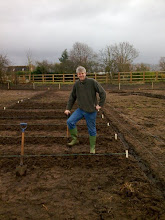
Due to work commitments I have been struggling to find time to do much on the plot over the Winter months but bit by bit, by nipping up there for an hour or so whenever I have been able to do so, over the last few weeks I have managed to pull up a mountain of weeds and dig over most of next season's beds.

I have also cleared out the greenhouse and repaired the storm damage from the high winds which we had a couple of weeks ago. I got off lightly; a few greenhouses on our site suffered severe damage and my neighbours on Plot 26 lost their greenhouse altogether. Fortunately I only had to replace one pane of glass. Other panes had slipped and moved position and some were hanging precariously but only one had shattered.

I have still got a fair bit of digging and weeding to do before I'll be ready to start planting but compared to last year I think I am slightly ahead of my allotment work schedule. The problem last Winter was that the ground was frozen solid from about November until to the end of January and then when the thaw came a large section of the plot resembled an unworkable paddy-field until March or early April. The comparatively mild winter we have had this year has meant that at least the ground has been workable when I have found a few minutes here and there for digging and weeding.

As you can see from the photo above, when I called round at the allotment this afternoon all the weeds had miraculously disappeared.

Sunday, 13 November 2011

Beetroot - Best Root

I had a go at growing beetroot this year for the first time. It was a very simple crop to grow and has been one of my success stories for this year. I set aside a 6ft x 4ft corner of the plot and sowed a few rows of Boltardy Beetroot seeds, about 6 inches apart, directly into the ground in about late April or early May. I had pre-prepared the ground by digging it over and lining each row with an inch or two of home made fine brown crumbly compost. I then left the beetroot patch undisturbed for about four months.

I had pretty much forgotten about the beetroot until the end of August when I was scratching around on the plot to see if there was any reasonably attractive produce which would fit into any of the classifications at our local agricultural society show on the August bank holiday Monday. Through the weeds which had invaded the beetroot bed I could see that there were a few decent sized roots protruding slightly above the surface of the soil and so I picked three of them, trimmed them, washed them and gave them a gentle scrub with a vegetable brush. They looked ok to my untrained eye. I have no idea what a show judge looks for in a beetroot but I entered them into the show anyway. 

I was surprised at the high number of entries in the beetroot class. My heart dropped when I noticed that everyone else had left long trailing roots on their beets. I had tidied mine up by snipping the roots off with a pair of scissors. Being an absolute novice I assumed that I had made a fatal mistake and that my castrated entries would be laughed out of the show tent. I left my docked efforts on the display table and went off to enjoy the rest of the show and to have a couple of consolatory beers in the beer tent.

I returned to the show tent about four hours later. I hoped that the hilarity caused by my eunuch beetroots would have died down by then. As I approached the display table I could see that one of my beetroots had been sliced in half. The judge must have liked what he found inside the beetroot because, to my total amazement, he had awarded second place to me.

During September and October Mrs PlotNotes boiled up a few beetroots every now and then and I enjoyed them sliced onto a cheese sandwich. Three or four weeks ago I realised that there were a lot of beetroots still in the ground. There were more than I could consume in cheese sandwiches alone and so I decided to do something else with them. After a bit of research I decided to make beetroot chutney.

I had never attempted to make chutney before. I don't really do very much cooking at all. It's not that I can't cook or won't cook it is just that Mrs PlotNotes has always arrived home from work before me and it makes sense for her to get cracking with the evening meal before I get home. When I do get creative in the kitchen, for example when making my patented chilli dumplings, it infuriates Mrs PlotNotes because I invariably use every utensil in the kitchen and it takes me twice as long to prepare any given dish than she would spend on it.

For the beetroot chutney I didn't follow a set recipe but pretty much made it up as I went along using ingredients which I had to hand. I boiled up 18 good sized beetroots. Whilst they were simmering I prepared an assortment of mis-shapen and misfit vegetables which had been lingering on the plot for far too long. These included three very large fat carrots which were too big to have as part of a meal but which were ideal for grating. I also finely chopped five large onions. In a blender I chopped up ten chilli peppers along with a load of tomatoes at various stages of ripeness ranging from green to red and slightly mushy. They were, I thought at the time, the last tomatoes of the year. In fact, there is now another crop of tomatoes ready for picking. I also chopped up a full garlic bulb.

I then peeled and diced the beetroots and put them into a very large deep cooking pot. By this stage the kitchen was starting to resemble a blood spattered murder scene. I then added the carrots, onions, garlic, chillis and tomatoes. Next I added about a pound and a half of granulated sugar to the mix and poured a pint and a half of Sarsons spiced pickling vinegar over the whole lot and brought it up to the boil whilst stirring. I also added a bit of salt, and the odd spoonful or sprinkling of various herbs and spices which I could find in the kitchen cupboards including, black pepper, cumin, turmeric, curry powder, and paprika. I then let the whole lot boil and boil and boil into the early hours of the morning. I think I had added too much vinegar and it took me hours of boiling until the mix reduced into something which had a nice looking chutney consistency to it.

In the meantime I had cleaned and sterilised my glass jars and warmed them up in the oven. I then scooped the chutney, whilst still hot, into the jars and sealed the lids tightly straight away. I stored the jars in a cupboard for almost a week before opening the first one for tasting. I am very pleased with the result. To me it tastes delicious but I think the best indication of quality comes from the fact that Mrs PlotNotes has been devouring it by the heaped spoonful putting large dollops of it on the side of her plate with virtually every meal.
Beetroot will definitely be on my seed order and menu for next year.

Sunday, 6 November 2011

Late Crop.

I spent this afternoon on the plot working on routine traditional November tasks such as dismantling the pea frames and the bean frame and generally tidying up the plot ready for Winter, oh and picking strawberries! I thought I'd picked the last of the strawberries for this year way back in July but the warm and sunny October weather has produced a surprise small crop of strawberries which were very tasty.


Friday, 30 September 2011

Copper's Surprise.

Throughout the course of the year our village pub does a great job in raising funds for the local air ambulance. One of their fund-raising activities this year has been a contest to see who can grow the longest carrot. Last year they had a pumpkin growing competition. It was leeks the year before last and next year they are having an onion challenge.

I didn't enter the carrot contest but my neighbour, Tony, from Plot 24 has taken part. Tony is one of the keenest gardeners in our allotment association. You might catch glimpses of his immaculately maintained plot in some of my photos. His is the plot to the left of my weed patch. Tony has put some real hard graft into his plot. There isn't a single weed to be found anywhere on his allotment and I'm sure that it is not possible to keep an area of over 200 square metres of fine Lincolnshire soil weed-free without regular dedicated hard work. He has deservedly been rewarded with the Parish Council's trophy for the best kept plot this year.

You might recall that earlier this year I posted a photograph on this blog which showed a seven foot length of drainpipe standing in a bucket. That was where Tony was growing his competition carrot. I think the pipe was filled with his own secret formula of sand, soil and compost. A couple of carrot seeds were sprinkled into the top of the upright pipe and the other end was placed in a bucket of water. The theory was that a monster carrot would grow inside the full length of the drainpipe.

The week before last it was busier than usual in our village pub. Thieves had stolen the copper cables which ran to the village from the telephone exchange which is in the neighbouring village. Apparently there is a lot of this going on at the moment. The thieves park up in a van at a secluded spot on a country lane between villages. They then dig up the copper telephone cable and tie it to the back of their van before driving off with the cable still attached. In doing so they will strip hundreds of metres of cable out of the system. The following night they took the lines connecting another local village. This left over half of the homes in our village without telephone lines or internet connections for about a week.

With only the usual rubbish on television and no access to the internet or telephone lines it was not surprising that people went to the pub for entertainment. The pub had an added attraction in that it had not lost its internet connection and the landlord allowed open access to his wireless network. It was on one of these nights that the judging of the carrot contest was held. Tony had forgotten all about it and was sitting in the back bar minding his own business while his carrot was still growing in the drainpipe on the allotment about a mile away down one of the quiet lanes leading out of the village.

The bar manager offered to drive Tony to the allotments in her transit van to fetch his carrot. So, off they went into the dark night in the van. On arriving at the allotment gates Tony realised that he had not got his key with him and so they parked the van in the verge and then took a couple of torches out of the back of the van before scrambling over the perimeter fence into the allotment site. It was too dark to extract the carrot from the drainpipe on the plot and so they carried the carrot, drainpipe and all, over the fence and into the back of the van.

Not much happens in the village without someone noticing. Naturally the combination of a van in a secluded spot, torch lights, and a long pipe being loaded into the back of the van had made someone suspect that the cable thieves were back. Before the van made it back to the pub they were stopped by a police patrol car.

The police officer, thinking he had nicked the cable thieves, asked what was in the back of the van. I would have loved to have been there to hear Tony tell them that there was nothing there but a five foot long carrot and to see the policeman's face when this turned out to be true.

Tony went on to win the carrot growing contest.

Sunday, 25 September 2011

Be careful what you wish for.

I sat in the office meeting room with my head in my hands. Worrying thoughts rushed through my brain at an alarming rate and I had the sensation that I was hurtling downwards, rapidly, uncontrollably, through thin air towards jagged rocks below. I felt sick and cold. I took a deep breath and glanced up. My eye was drawn to a splash of red paint daubed across the large modern-art splatter painting on the wall opposite. "Blood on the walls", I thought, "how appropriate. My blood!" I had just been told that I was to lose my job.

 
My mind was spinning as I weighed up the enormity of what I had been told. I was thinking, "how can I survive this? How will I pay the mortgage? I'll lose the house. How will I feed the children? Plans for the Summer holidays are in tatters. No one is recruiting at the moment; how will I find another job. I will never survive this? This is so unfair? Don't these head-office suits understand how much work I have been doing for them? I feel Helpless. Hopeless. Falling. Doomed".

 
An involuntary consolatory thought then popped into my head, "At least I'll now have more time to spend on the allotment". I then remembered that only a few days previously I had been complaining about being short of time and wishing that I had more time to devote to the allotment. I made a mental note that in future I should be more careful about what I wished for because my wishes might just come true.


As things have turned out that wish has not come true. I have not had any extra time on my hands hence the lack of updates to this Blog during the last couple of months. Before losing my full-time job I had been earning some extra income from a self-employed sideline. That sideline has now, by necessity, become my full-time self-employed job. I have thrown everything into building it up and it seems to be taking off. The hours can be long, irregular and unpredictable but at least I have the comfort of knowing that the more work I do the more I will get paid and I am not lining the pockets of a bunch of inconsiderate absentee masters. The downside is, as ever, that I have not really freed up any extra time for the allotment. Also, whereas, as an employee there was a clear demarcation between my time and their time, I am currently struggling to set aside time to work on the allotment without having nagging thoughts that I should really be concentrating on the business. I am going to have to make a conscious effort to set aside time away from the business.


All this is not to say that the allotment has been totally neglected. I have still been harvesting plenty of veg and I have found some time (but not enough) for a bit of weeding. Some crops have exceeded my expectations and one or two others have disappointed or have run to seed. In my next post, which hopefully won't be too far away in the future, I'll give a review of the season and I will also let you know how I got on with my entries in the local horticultural show at the August bank holiday but until then here's a picture of some of my grapes which are one of my success stories for this year.


Saturday, 30 July 2011

Weeding weeding weeding!

To the untrained eye it might appear that I have not done much work on the plot recently.

However, this mountain of composting weeds, which has formed behind the pumpkin patch over the last week or so, gives an indication of what I have been busy doing.


There is still plenty of weeding to be done too.

We are having an open day on the allotment site tomorrow. I'll spend the day weeding weeding weeding.

Monday, 27 June 2011

Hot Stuff

Happy days! Home grown chillies are back on the menu. My serving suggestion? Best served with anything and everything.

Sunday, 19 June 2011

Pumpkin Surprise!

A few months ago I made an early start in preparing a special bed for pumpkins. I dug a load of horse manure and home made compost into the bed and then I excavated a short trench down the centre of the bed which, over the course of a few weeks, I filled with kitchen waste from home. 

We keep a small plastic bucket with a screw-top lid in the kitchen into which we put various bio-degradable fruit & veg off-cuts, peelings, scrapings etc for composting. Each week I would tip the contents of the bucket into the trench and cover with a layer of soil until I was left with a nice mound of rich rotting waste covered in soil down the middle of the bed. Since then I have left the bed, undisturbed, to rot down whilst I have grown the pumpkin plants from seed in the greenhouse.

I had almost forgotten about the pumpkins until this weekend when I noticed them looking slightly pale and pot-bound fighting for light under a canopy of 5ft high tomato plants. Meanwhile the pumpkin bed had become a mass of weeds which were clearly thriving in the nutrient enriched soil.
A few weeks ago I had noticed that amongst the weeds there were two or three bushy growths which looked very much like potato plants. I assumed that there must have been some potato peelings in the kitchen waste from which potato plants had sprouted. I paid no attention to them; as far as I was concerned they were weeds. In April and May when I tenderly wrapped my first earlies and main crop potatoes in fleece I ignored these pumpkin plot invaders. In May and June when I have given an almost daily drenching of water to my official potato bed the pumpkin bed has been left parched. Any weeds which have dared to raise their heads above neat rows of potatoes in the regulation potato plot have been quickly yanked out and thrown onto the compost heap whereas the weeds in the pumpkin bed have just been left to get on with it.

This weekend I removed all the weeds from the pumpkin bed in readiness for planting out the pumpkins and was surprised to find that I have accidentally grown a lovely crop of new potatoes some of which were consumed with my Fathers' Day Sunday dinner today.
It does make me wonder if all the careful preparation of the main potato plot is really necessary. Why bother with the double digging, marking out, trench digging, spacing out, mounding up, wrapping in fleece, watering and weeding when you can get such delicious results by simply chucking a bucket full of kitchen slops into a hole.